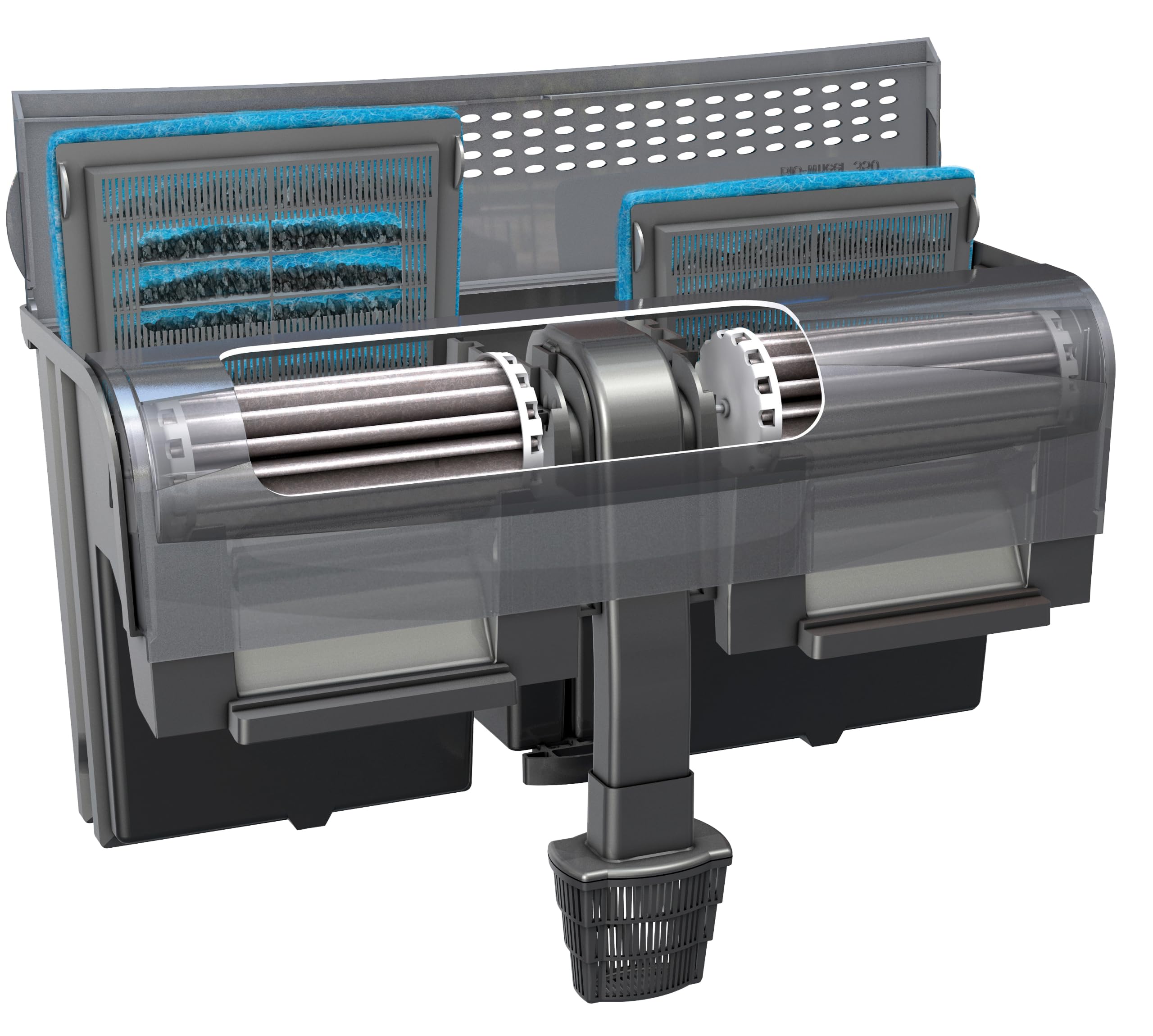
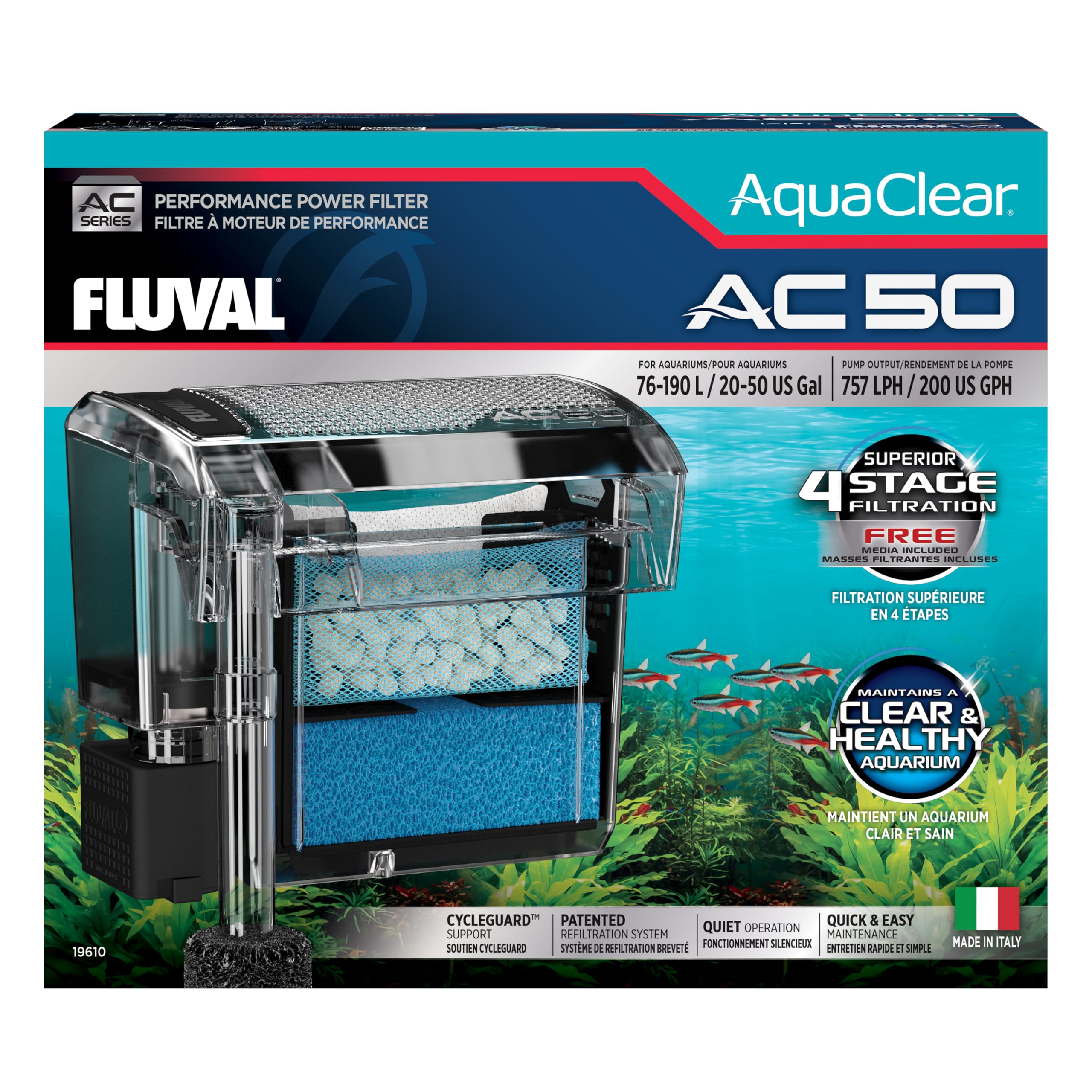
How to choose the right filter
Filters look alike on the shelf but differ in the specs below. Read how to cycle a fish tank to see what a filter's bacteria actually do, and compare canister vs hang-on-back filters if you are unsure about type.
Match the filter to the tank first. Aqueon's FAQ advises choosing "a filter rated one size larger than your aquarium" (Aqueon FAQ). Then look at what the bacteria need. Nitrifying bacteria need oxygen and alkalinity: UF/IFAS says they stop working effectively when total alkalinity falls below 20 mg/L, and advises keeping dissolved oxygen above 5 mg/L (UF/IFAS). A new biofilter takes about six to eight weeks to establish, so treat the tank as cycled only when tests show ammonia at zero.
Remember that flow drops as media clogs. Seachem says media can become clogged with detritus, reducing or obstructing flow (Seachem), and Marineland says to change a cartridge once a month or when you see a reduction in flow (Marineland). Maker pages rarely publish decibel figures, so treat any noise claim as the maker's own. Ammonia-binding products give only short-term relief; a properly sized biofilter is the long-term fix (UF/IFAS).
Rated tank size
Use the Rated tank size column and choose a filter rated at or above your tank volume. The makers set the rating, so treat it as their guide. A rating below your tank size means the filter was not built for that much water.
Flow rate
Compare the Flow column to your tank, and look for adjustable flow if you keep fish that dislike current. Flow is the maker's figure and falls as media clogs. Our canister guide covers higher-flow options.
Biological media capacity
Nitrifying bacteria turn ammonia into nitrite and nitrite into nitrate, and UF/IFAS says a properly sized biofilter is the long-term fix (UF/IFAS). Check the Media stages column and how much space is given to biological media.
Noise
Noise figures are from the maker, not from independent measurement. A sponge filter driven by an air pump has a different sound from a hang-on-back with a waterfall. Check the Noise column and think about the room the tank sits in.
Ease of media changes
Look at how the cartridge or sponge comes out. Follow your filter maker's instructions for rinsing media, because makers differ on tank water versus running water (see canister vs hang-on-back filters). Easy access means you will do it on time and avoid over-cleaning.
Power use
The Power column shows watts as listed. A low-wattage filter running around the clock costs little to run. Compare watts only between filters of a similar flow rating; a bigger filter naturally draws more.